Saturday, October 17, 2015

Alder Springs Hike to the Deschutes


Yesterday, Waldo and I took what I think is the best autumn hike I have ever had. Maybe it was the weather, warm, yet overcast. Maybe it was my mood—happy to be out hiking after a 13 day hiatus. I returned from my Grand Canyon Rim to Rim hike less than two weeks ago, but in between there was a trip to Chicago for my Dad's memorial, and as usual, it takes me time to get the energy to leave home after I have been gone. Particularly after the Chicago trip. There was so much to process, so many emotions to hold, and goodbyes to say. So, it was probably all that that helped make my hike special—it was a quiet respite, a grounding walk among the bluffs and buttes of Oregon's High Desert.


Alder Springs trail begins on a high plateau overlooking a cleft in the ground where Whychus Creek (the Sahaptin word for "a place to cross the water") flows clear and untamed. Ponderosa Pine sprout from its base, a green stash on a bunch grass face. Soon Waldo and I started our descent into the canyon. Part way down we could hear the rush of water coming from Alder Springs. The springs is like the Metolius, which sprouts from the bottom of a hill a full fledged river. Like the Metolius, the water was clear and cold and Waldo and I drank from it. I was drawn to this hike because Bonnie Olin, author of Owyhee River Journals, posted that just last week she had seen Bull Trout in this creek. Waldo and I were not as lucky, but it was good to know the endangered trout had found shelter.

After another half mile, we forded the creek and then hiked along and above it through Basin Wild Rye, Rabbit Brush, wild rose, fern, Equisetum Hyemale (Horsetail Reed), Juniper, Ponderosa Pine and Sage Brush. And of course all along the lower path were the name sake of the trail—Alders—their now golden tear drop shaped leaves danced in the breeze and carpeted our path.


After just three miles, we reached the confluence of Whychus Creek and the Deschutes. The geology was largely exposed cliffs of volcanic ash and Columbia Plateau lava flows sculpted by wind and water. Interspersed were layers of river conglomerates. After I returned I learned that somewhere along those cliffs are petroglyphs. I did not see them, but will return to search.

At the confluence of the Whychus and the Deschutes there was a wonderful basalt outcrop, a perfect place to share a sandwich with Waldo, explore the cliff sides and dip in the water. The area was clearly a destination for the Eagle we had spotted earlier—it was littered with bird wings and feathers.


After our snack we headed the three miles back to the car, cresting the ridge just as the sun set behind the spine of the Cascades.

The public's access to Alder Springs is relatively recent. Up until a couple decades ago, it had been a private ranch. Then in the 1990's authorities took possession of the land after they discovered the old ranch house had become a meth factory. The structure was destroyed and the land given to the Forest Service. The eight hundred acre parcel is now part of the Crooked River National Grasslands. Alder Springs is closed to the public from December 1 to March 31 to protect its wildlife habitat. Elk, deer and antelope can often be seen roaming the area. The lack of cattle has given the plants some time to recuperate. There are healthy stands of native Blue Bunch Wheat Grass and Basin Wild Rye.


It took two and a half hours to get to Alder Springs from the Willamette Valley, so I drove back over the pass in the dark, feeling full and satisfied and utterly lucky to call Oregon home.


I like how this juniper looks like it has seeds blowing off it like a milkweek pod
Equisetum Hyemale (Horsetail Reed)
Common Teasel (thank you for the id. Scott Bowler)


- Naseem Rakha
October 16, 2015

Tuesday, October 13, 2015

Male, Female or Other


If you've filled out a form on Google lately you probably have seen a brand new option when it comes to Gender. Instead of the standard Male and Female, people can now choose Other.

I just found a video about one of my town's "others." In it, then-Mayor, Stu Rasmussen is showing Statesman Journal reporter, Cara Pallone, the inside of his closets (as well as his handcuff collection.) Stu achieved international fame for being one of the country's, if not world's, first openly transgendered Mayors. He grew up in Silverton, runs the town's only movie house, and walks Silverton's streets dressed in a way which emphasizes not just his legs (which are enviable,) but also what he likes to call "the twins"—augmented breasts which stand out—literally as well as figuratively.

In most aspects, Silverton appears to be your average rural American town. It has the Elks, Kiwanis and the Lions clubs, is filled with churches, has a feed store, and a one lane train track that hauls grain and seed. It has cute parades featuring the high school band and local pets. It houses teachers and doctors and librarians and artists and folks who work for the state in one capacity or another. Your typical rural community, red white and blue bunting in July, Christmas tree lighting after Thanksgiving. Yet, in 2008 and again in 2010, Silverton residents voted in the most non-conformist of Mayors. They also came out in force when the Westboro Baptist Church came to Silverton to tell us we were all going to hell for having a transgendered Mayor. Many of the town's businessmen dressed as women to confound the Topica, Kansas "Christians."

I like that about Silverton. I like that once, while sitting with Stu at a garage sale, I watched him haggle with a farmer over a tractor. Stu had driven the tractor over and then put a pair of shiny red stilettos on the hood as bait. At first the farmer, dressed in overalls and seed cap, seemed taken back by Stu's attire: a mini skirt, six inch heals, and a shirt cut so low it exposed a good canyon of cleavage. But within minutes the farmer and Stu were talking away about gaskets and plows and whatever else one talks about when talkin-tractor. A few minutes later, the farmer was in, he wanted the tractor, but only if Stu would throw in the shoes.

"For the wife," he said with a wink.

My favorite line in the interview by Cara Pallone is when Stu tells her that typically two to three percent of the population of males are cross-dressers. "Which means on Halloween when you see a man dressed in a dress, if he knows how to walk in the shoes, he does it more than just once a year."


-Naseem Rakha
October 13, 2015

Wednesday, September 23, 2015

Grand Canyon Artist in Residence


Last year while back at the Grand Canyon, I and a few other Artists in Residents were interviewed for this beautiful 5 minute film about the importance of AIR's. The students from Columbia University did a very nice job.

Wednesday, June 24, 2015

Homeless Dogs


Of note this morning: overweight woman in a scooter buys four large bags of candy. As she reaches into her bag for her wallet, she pulls out a plastic bag that contains a single large milk bone. "I haven't seen any dogs this morning," she says to the Rite Ad cashier. "I don't give money to 'dem bums outside. But if they have a dog, I'll give 'em a biscuit." 

Outside Rite Ad I hear several dogs barking. They are a block away, standing among a small group of people. Beside me, a man hosting a full length leg cast and tattered, street-stained clothes points a yellowed finger in the dogs' direction and yells, "SHUT UP!" 
And I think, "fat chance."

Certainly the sound of the street--the cars, the busses, light rail zipping by, voices haling cabs, shouting about the "all mighty Lord Jesus," speaking to lovers, to business partners, to friends, to enemies, into phones, into the wind to no one in particular--would drown out this one man's voice. 

Yet not minutes later, not even seconds, but immediately, the dogs quit their barking. I turn back and look at the man and he pulls his hand back into his pocket and smiles.

I am upon them now, three dogs two street people, all outside a Starbucks. The people hold signs, "Anything helps." The dogs sit beside their humans, one climbs on a back pack. Lies down. 

I give its owner a few bucks, and walk away, my eye out for the overweight scooter-woman with the bags of candy and the dog bone.

6/24/2015


Friday, June 19, 2015

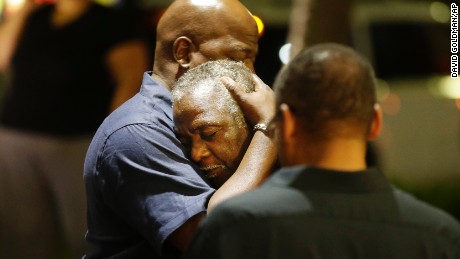
Jon Stewart on the Emanuel AME Shooting


Last night comedian Jon Stewart, the host of Comedy Central's The Daily Show, set aside his jokes to speak directly to his audience about the deaths of nine African American worshipers at the historical Emanuel AME Church, in Charleston, South Carolina.

A solum and unscripted Stewart, stares straight into the camera - saying we the people of the United States are more of a threat to ourselves than foreign terrorists, and that our failure to see and remedy our racist presumptions is a blood toxin that is destroying this nation. His words are powerful, and he absolutely right.

Please watch.

Monday, May 25, 2015

The Face of War


The Unknown Soldier, David Jay, Photographer


This is what we do.

We spend the bulk of our nation's resources on war, and then we bring our dead and wounded home and pretend there is no war.

The Unknown Soldier, Photographer David Jay
There is war.

As you get up this morning and drink your coffee—
there is war.
As you walk your dog—
there is war.
As you scan the aisles at the grocery store
and flip off the guy who cut in line
as you sit in your chair at home
and open another bottle of beer
and turn on Game of Thrones—
there is war.

We send young men and women into foreign lands and ask them to do things that bend their minds with what their eyes have seen, and their hands have done, with what they have heard and tasted and smelled.

Pictures like these demand we acknowledge our actions. That we be accountable. They demand we find a better way to co-exist on this planet. Be more humble, more grateful, more creative, more trustworthy, more open to the reality that killing will never—not ever—resolve anything.

Pictures like these ask us to not just look, but see.

Iraqi girl wounded in car bomb. Photographer Michael Yon, 2005

Facts:

Since 2001, approximately 2.5 million service members have been deployed to Iraq and Afghanistan.  Almost half have been deployed more than once.  

Since the beginning of operations in March, 2003, 6851 U.S. soldiers have been killed

9% of evacuated soldiers lost a major limb.

In total, since the beginning of operations, 675,000 U.S. Veterans have been granted disability.

Studies indicate 22 veterans commit suicide every week.

In Iraq, over 70 percent of those who died of direct war violence have been civilians. Iraq Bidy Count conservatively estimates that at least 133,000 civilians have been killed in direct violence due to war between the invasion and early May 2014

Updated Death and Injury Rates of U.S Military Personnel During Conflicts in Iraq and Afghanistan, Congressional Budget Office, December, 2014

To see more pictures go to: The UnKnown Soldier, David Jay, Photographer

For a story on David Jay and his photos go to the NPR story: It's Not Rude, These Photos are Meant to be Stared At


Sunday, May 10, 2015

Happy Mother's Day, Mother Earth


Years ago, I worked for an organization created by Allan Savory called The Center for Holistic Resource Management. The Center's mission was to reverse the advance of desertification through a decision making model that incorporated community and social needs, values, economic priorities, and ecosystem requirements. Savory's theories were developed by his observations of what happened on the African veldt after he advocated for the extermination of more than 40,000 elephants in a mis-guided effort to stop overgrazing. It was tragic mistake, and led Allan to seek true answers to global warming.

My job at CHRM took me all over the country, working with farmers, ranchers, tribes, and government agency staff.

It was rewarding work. Important work. Necessary work. Through Savory's methods, many age-old conflicts between environmentalists and ranchers, ranchers and the BLM, tribes and the BIA, or city dwellers and farmers, were quelled. Ecosystems thrived. Wildlife responded. Farms and ranches were saved.

One of the tools I used when I taught was Peter Russell's amazing video, The Global Brain. I just watched it this morning, again, and I must say its message is even more pertinent today than it was 32 years ago, when the film was made.

So for today, on Mother's Day, give the earth a little squeeze, and watch the film I have posted at the top of this page.  Its message is clear, we each play a critical role in serving and saving this planet. Nothing lives in isolation, and it may very well be that we are living in just the right time and age to begin a true process of healing the damage we have caused to Mother Earth.

And below, is Allan's amazing Ted Talk. Here you will learn about Allan's experience in Africa, and see for yourself how much difference his programs have made to stop the process of desertification. I promise, if you watch this, you will see global warming and climate change in a very different light.